
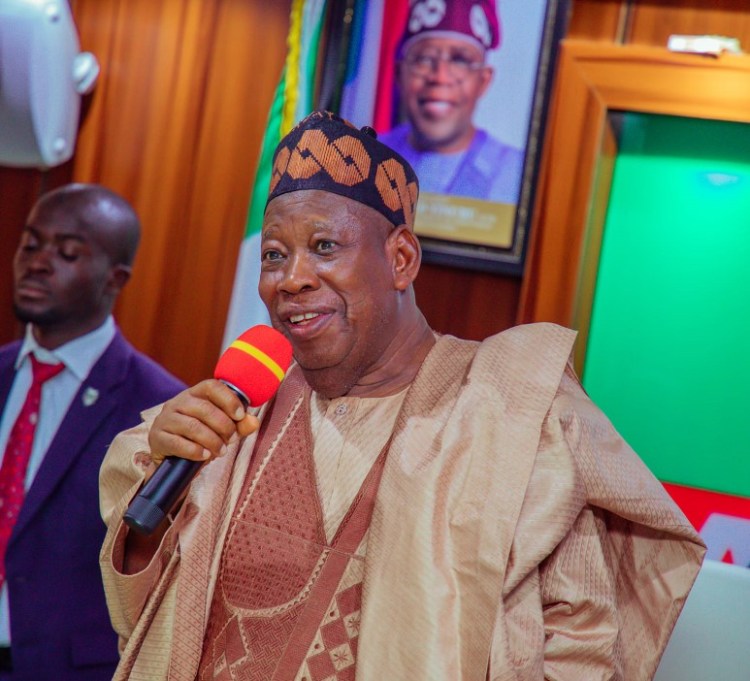

When Dr. Abdullahi Umar Ganduje conceived the idea of transforming Kano into a major trade and logistics hub through the Dala Inland Dry Port (DIDP) project, few could imagine how significant that vision would become for Nigeria’s economy. Today, as political dust gathers around the initiative, many observers argue that the controversy says more about politics than it does about the project itself.
The Dala Inland Dry Port was never just a piece of infrastructure. It was part of a broader strategy to revive Kano’s age-old role as the commercial heartbeat of Northern Nigeria, a city once known as the center of trans-Saharan trade. By linking the region directly to international markets via rail from Lagos seaports, the project aimed to decongest maritime terminals, create jobs, and reduce logistics costs for importers and exporters across the North.
In recent weeks, however, reports began circulating online alleging that members of the Ganduje family and even the Kano State Government hold secret shares in the company managing the port. These claims, which spread rapidly on social media, alleged that millions of shares were allotted to the former governor’s children through falsified company resolutions.
Related:
Dala Inland Dry Port Dismisses Reports Linking Ganduje’s Family to Ownership
The management of Dala Inland Dry Port has now moved swiftly to set the record straight — dismissing the allegations as false, misleading, and politically motivated. In a detailed statement signed by Barrister Adamu Aliyu Sanda, the company’s secretary, DIDP made it clear that neither the Ganduje family nor the Kano State Government owns any stake in the project.
“Verified records from the Corporate Affairs Commission (CAC) clearly show that no member of the Ganduje family has ever been a shareholder, director, or signatory in Dala Inland Dry Port,” Sanda stated.
According to the company, the project was originally owned by businessman Ahmad Rabi’u, before City Green Enterprises (CGE) acquired 80 percent of its equity, leaving Rabi’u with 20 percent — a transaction that was properly registered and devoid of any government or political interference.
But why, many ask, is Ganduje being drawn into a project he neither owns nor manages?
The Politics of Perception
Observers say the controversy surrounding the Dala Inland Dry Port is a classic case of politics overshadowing progress. Since leaving office as governor of Kano State and later serving as National Chairman of the All Progressives Congress (APC), Dr. Ganduje has remained one of the most influential political figures in Northern Nigeria. His name, for better or worse, often attracts both admiration and attack.
Read Also:
Ganduje: Between Education, Faith, and Community Development
“The Dala Inland Dry Port is being used as a political tool to distract attention from the real purpose of the project,” said a political analyst, Malam Nasiru Garko, in an interview with The Historica Nigeria. “This is not the first time Dr. Ganduje’s development legacy has been dragged into unnecessary controversy. The truth is — his record in infrastructure and trade development remains unmatched.”
Indeed, during his tenure, Ganduje’s administration invested heavily in creating an enabling environment for logistics and trade. He provided the land and infrastructure necessary for the dry port to take off, coordinated with federal agencies, and encouraged private investors to bring in capital — all without the state directly taking ownership.
The DIDP management confirmed that the Kano State Government’s only role was providing infrastructure support under the Corporate Social Responsibility (CSR) initiative facilitated by the Nigerian Shippers’ Council (NSC).
“The provision of infrastructure at the Zawaciki site was purely developmental support to promote economic growth in Kano,” the company clarified. “CSR assistance does not constitute ownership.”
A Legacy of Vision, Not Self-Enrichment
Those familiar with the port’s evolution argue that Ganduje’s involvement was purely strategic and public-spirited. The project was part of his vision to integrate Kano into Nigeria’s larger export economy and attract global trade partners through improved logistics.
Economists note that once fully operational, the Dala Inland Dry Port is expected to process over 20,000 containers annually, generate thousands of jobs, and boost local industries through efficient cargo handling and warehousing services.
“Every great project in Nigeria faces political interpretation,” noted Dr. Musa Baffa, a development economist at Bayero University Kano. “But what cannot be denied is that the Dala Port is now operational, already facilitating export shipments from Kano to international destinations — that is tangible development.”
Beyond the Smokescreen
The management of DIDP described the forged documents circulating online as part of a broader campaign of mischief engineered by aggrieved individuals seeking to politicize a private commercial venture. They urged the public to disregard such falsehoods, assuring that all financial and ownership records remain transparent and verifiable.
“You cannot remove what never existed,” the company stated, referring to claims that Ganduje’s family and the Kano State Government were “removed” as shareholders. “No such names have ever appeared in the CAC filings since inception.”
Ganduje’s Broader Economic Blueprint
While the controversy continues to swirl, one undeniable fact remains — Dr. Ganduje’s economic development model has outlived his time in office. His administration’s emphasis on trade infrastructure, rural development, and private-sector partnerships continues to define Kano’s growth trajectory.
Projects like the Dala Inland Dry Port, the Kano Economic City, and the establishment of the Progressive Institute (TPI) reflect a broader philosophy: economic empowerment through strategic collaboration.
“His focus was never on personal gain,” said Umar Idris Shuaibu, a journalist and political analyst based in Kano. “It was about connecting Kano to the world, empowering youth through commerce, and creating lasting opportunities. The Dala Port is part of that legacy.”
Conclusion: Development Beyond Politics
As the Dala Inland Dry Port moves toward full commercial operation, it stands as a reminder of how political narratives can obscure genuine progress. While critics spin allegations, containers continue to move, jobs are being created, and trade is expanding — fulfilling the very vision that inspired the project in the first place.
Dr. Abdullahi Umar Ganduje’s role in making that vision a reality may continue to attract political debate, but for those whose livelihoods now depend on the port’s success, the facts are far more important than the fiction.
Because, ultimately, development speaks louder than politics.