
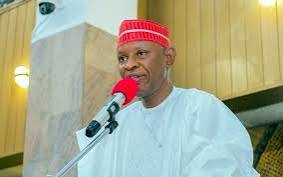

The Kano State Government has inaugurated a multi-agency task force to tackle drug abuse, illicit drug trafficking and other related criminal activities across the state.
The task force comprises representatives of security agencies, including the Nigeria Police Force, Department of State Services (DSS), National Drug Law Enforcement Agency (NDLEA), Nigeria Customs Service, Nigeria Immigration Service and the Nigeria Security and Civil Defence Corps (NSCDC), as well as representatives of civil society organisations, traditional institutions, religious bodies and business communities.
Speaking during the inauguration, the state government commended the Public Complaints and Anti-Corruption Commission (PCACC), describing its leadership as a no-nonsense institution that had made significant contributions to the fight against corruption and other related offences.
The government also congratulated members of the task force, saying they were selected based on merit, competence and trust.
It noted that Kano had one of the largest youth populations in Nigeria, with young people constituting about 60 per cent of the state’s population, but expressed concern that the state was also among the sub-national areas significantly affected by drug abuse.
According to the government, drug abuse has devastating consequences for individuals, families and communities, as it destroys young lives, disrupts education and careers, fuels criminal activities, weakens family values and undermines social stability.
It further said the menace negatively affected the economy by reducing productivity and increasing the cost of crime prevention and law enforcement.
The government linked drug abuse to various criminal activities in the state, including political violence, street intimidation, phone snatching, burglary and other forms of crime.
It therefore said that tackling drug abuse would strengthen the integrity of the democratic process, improve public safety and promote peaceful coexistence across Kano State.
The government pledged to provide financial support for the task force’s prevention campaigns, enforcement operations, data collection and rehabilitation programmes.
It also promised to grant the task force the necessary independence to carry out its responsibilities without unnecessary interference, while providing adequate security support for its operations.
The government further disclosed plans to expand access to rehabilitation facilities in the state, noting that the state currently had rehabilitation centres for boys and girls, with plans to expand the facilities to meet growing demands.
It also pledged to provide the task force with suitable office accommodation, operational vehicles and other necessary logistics.
The government urged members of the task force to dedicate themselves fully to the challenging responsibility and engage communities, religious leaders, traditional rulers, civil society organisations, educational institutions, youth groups and other stakeholders to strengthen prevention, early intervention, rehabilitation and social reintegration efforts.
It also called on residents of the state to extend their full support and cooperation to the task force.
The government expressed optimism that, with collective efforts, Kano could be made free from drug-related offences through the dismantling of networks involved in the trafficking and distribution of illicit drugs and other harmful substances.
The chairman of the task force is expected to provide further details on its terms of reference and operational mandate.
The state government thereafter formally inaugurated the multi-agency task force and wished its members success in the discharge of their responsibilities.